
What UK Punters Need to Know About Exacta Box Betting
- An exacta box covers all finishing order combinations of your selected horses, with cost calculated as n × (n-1) × unit stake, so boxing three horses at £1 costs £6 total.
- UK Tote Exacta pools carry a 25% deduction rate, higher than the 19.25% Win pool takeout, but historically beat Computer Straight Forecast returns in 73% of races while paying 30% more on average.
- World Pool integration means UK bettors now access global liquidity exceeding £29 million on major race days, creating deeper pools and more stable dividends.
- Strategic boxing works best in mid-sized fields of eight to twelve runners where favourite vulnerability exists; over-boxing large fields destroys value through excessive stake outlay.
- Always compare Tote Exacta probable payouts against bookmaker CSF prices before committing, as neither product consistently dominates across all race conditions.
What Is an Exacta Box Bet?
An exacta box bet is a wager that requires you to select two or more horses to finish first and second in a race, but without specifying which horse finishes where. The key word is flexibility. Where a straight exacta demands you pick Horse A to win and Horse B to finish second in precisely that order, boxing those same selections means either combination pays out. Horse A first, Horse B second? Winner. Horse B first, Horse A second? Also a winner.
In UK betting terminology, the exacta box is functionally identical to what many bookmakers call a reverse forecast. The Tote uses "exacta" as the official pool product name, while traditional bookmaker forecasts achieve the same result through different mechanics. When you place a reverse forecast with a bookmaker, you are essentially boxing two horses at fixed or computer-calculated odds. When you place a Tote Exacta, you are entering a pari-mutuel pool where your return depends on how other punters bet.
Exacta Box — A combination bet selecting two or more horses to finish first and second in any order, with cost multiplied by the number of possible finishing combinations.
The mathematics behind exacta box cost follows a straightforward formula: n × (n-1) × unit stake, where n represents the number of horses you box. Selecting two horses creates 2 × 1 = 2 combinations. Three horses produce 3 × 2 = 6 combinations. Four horses generate 4 × 3 = 12 combinations. The progression accelerates quickly, which is why experienced punters treat boxing decisions with respect rather than defaulting to the maximum coverage their bankroll allows.
Understanding this formula matters because every additional horse you add to your box doubles or triples your total stake without proportionally increasing your chances of hitting a large dividend. Boxing five horses at a £2 unit stake costs £40 across 20 combinations. That £40 must be recovered from the pool payout, so unless you have genuine reason to believe multiple longshots could feature in the first two positions, more selective approaches often deliver better returns.
The UK Tote Exacta pool specifically requires your selections to finish first and second. Third place earns nothing, no matter how close. This differs from bets like the Tote Swinger, which pays if your horses finish anywhere in the first three positions. The precision requirement explains why exacta dividends tend to be higher than Swinger payouts on the same race, though obviously the Swinger hits more frequently.
How Exacta Box Betting Works
When you place an exacta box through the UK Tote, your money enters a pari-mutuel pool alongside stakes from every other punter betting on that race's exacta market. Unlike fixed-odds betting where the bookmaker locks in your potential payout at the moment you place the bet, pool betting means your dividend depends entirely on how the pool money distributes across all possible outcomes.
The process begins when you select your horses. Suppose you fancy three runners in a competitive handicap: a well-handicapped improver, a course specialist dropping in class, and a lightly-raced sort with scope for progress. Boxing all three creates six possible finishing combinations across the first two positions. Your £1 unit stake becomes a £6 total bet, with £1 allocated to each specific combination within the pool.
Throughout the betting period, the pool accumulates money. On major UK race days connected to World Pool operations, these pools reach substantial depth. Most World Pool days amass over HK$300 million in combined turnover across all connected jurisdictions, equivalent to roughly £29 million. That liquidity matters because larger pools tend to produce more stable dividends that better reflect the true probability of outcomes, rather than being skewed by a few large bets from individual punters.
After the race finishes and the official result is confirmed, the Tote calculates dividends by taking the total pool money, subtracting the operator's deduction, and dividing the remainder among winning ticket holders. For UK Tote Exacta pools, the deduction rate sits at 25%, meaning three-quarters of the pool money returns to punters while the remainder funds operations, prize money contributions, and racing's infrastructure costs.
Pool Distribution Example
Total Exacta Pool: £50,000
Deduction (25%): £12,500
Pool for Distribution: £37,500
Money Bet on Winning Combination: £2,500
Dividend Calculation: £37,500 ÷ £2,500 = £15.00
A £1 winning bet returns £15.00 (including the original stake)
The dynamic nature of pool betting creates both opportunity and uncertainty. Early in the betting cycle, probable payouts displayed on screens and apps serve as rough guides rather than guarantees. As more money enters the pool, these probables shift. Smart bettors monitor these movements, looking for spots where public money undervalues certain combinations relative to genuine probability.
When you box multiple horses, you spread your stake across all covered combinations equally. If your three-horse box costs £6 and two of those horses finish first and second, only the £1 portion allocated to that specific combination pays out. The other five portions covering non-occurring combinations return nothing. This is why boxing should be a deliberate choice based on genuine uncertainty about the order, not a lazy default because you cannot decide which horse will beat the other.
Pool betting also handles special circumstances differently than fixed-odds wagers. Non-runners trigger stake deductions according to published rules, dead heats divide winnings between affected combinations, and any disputes reference the official rules published by the Tote rather than individual bookmaker terms.
Calculating Your Exacta Box Cost
The formula for calculating exacta box cost requires just three numbers: how many horses you want to include and your unit stake. Multiply the number of horses by one less than that number, then multiply by your unit stake. Written algebraically: Total Cost = n × (n-1) × Unit Stake. Once you internalise this formula, you will never be caught off guard by a higher-than-expected debit from your betting account.
Let us work through practical examples across the most common boxing scenarios UK punters encounter.
Two-Horse Box
Selections: 2 horses
Combinations: 2 × 1 = 2
Unit Stake: £1
Total Cost: 2 × £1 = £2
The two-horse box is the minimum exacta box possible and creates just two combinations: Horse A first with Horse B second, or Horse B first with Horse A second. This represents genuine value when you strongly fancy two horses to dominate but cannot separate them on current form or conditions.
Three-Horse Box
Selections: 3 horses
Combinations: 3 × 2 = 6
Unit Stake: £1
Total Cost: 6 × £1 = £6
Adding just one horse triples your cost from the two-horse scenario. That £6 stake now covers six distinct finishing orders. The value calculation shifts accordingly: you now need the dividend to average at least £6 to break even, and preferably substantially higher to justify the additional coverage.
Four-Horse Box
Selections: 4 horses
Combinations: 4 × 3 = 12
Unit Stake: £1
Total Cost: 12 × £1 = £12
Four horses create twelve combinations, and at this level the cost begins demanding serious consideration. That £12 represents meaningful stake money for most recreational bettors. Before committing, ask yourself whether you genuinely cannot reduce the selection to three horses with similar coverage of the most likely outcomes.
Five-Horse Box
Selections: 5 horses
Combinations: 5 × 4 = 20
Unit Stake: £1
Total Cost: 20 × £1 = £20
Five-horse boxes require twenty combinations. At £20 for £1 units, you are investing meaningful capital that demands proportionally large dividends to deliver profits. The maths begins working against you unless at least one of your selections is a genuine longshot capable of producing outsized returns.
Six-Horse Box
Selections: 6 horses
Combinations: 6 × 5 = 30
Unit Stake: £1
Total Cost: 30 × £1 = £30
At six horses, the cost reaches £30 for £1 units. Most professional bettors view full six-horse boxes as inefficient unless the race presents exceptional circumstances. Consider whether keying or part-wheel structures might achieve similar coverage at lower cost, which we address in later sections.
The UK Tote permits flexible staking through what is termed "flexi betting." Rather than committing full £1 units, you can stake smaller amounts like 10p per combination while maintaining a minimum total bet of £2 on Exacta pools. This allows punters to construct larger boxes without proportionally larger outlays, though obviously the potential returns scale down accordingly. A 10p unit flexi bet on a six-horse box costs £3 instead of £30, but winning dividends pay just one-tenth of the displayed return.
Exacta Box Cost Reference Table
The table below provides quick reference for exacta box costs across the most common configurations UK punters use. Green-shaded rows indicate lower-cost options suitable for most bankrolls, amber shows moderate investment levels, and red indicates high-cost boxes that demand careful value assessment before committing.
| Horses in Box | Combinations | Cost at £1 Unit | Cost at £2 Unit | Cost Tier |
|---|---|---|---|---|
| 2 | 2 | £2 | £4 | Low |
| 3 | 6 | £6 | £12 | Low |
| 4 | 12 | £12 | £24 | Moderate |
| 5 | 20 | £20 | £40 | Moderate |
| 6 | 30 | £30 | £60 | High |
| 7 | 42 | £42 | £84 | High |
| 8 | 56 | £56 | £112 | High |
Notice how the progression accelerates. Moving from two horses to three adds just £4 to your £1-unit cost. Moving from seven to eight adds £14. This exponential growth explains why experienced bettors rarely box more than four or five horses without employing structured approaches like keying that reduce total outlay while maintaining coverage of their most likely scenarios.
For punters using flexi betting with 10p minimum units, divide all costs by ten while maintaining the £2 minimum total stake requirement for Tote Exacta pools. A four-horse flexi box at 10p units costs £1.20 in pure combination terms, but the Tote requires you to round up to the £2 minimum.
Use this table as a planning tool before race day. Knowing your cost commitments in advance prevents the uncomfortable surprise of seeing a larger deduction than anticipated, and allows you to structure your race-by-race bankroll allocation with precision.

Straight Exacta vs Boxed Exacta
The straight exacta requires you to name the first and second place finishers in precise order. Horse A wins, Horse B is second, exactly as you predicted. No flexibility exists. If your selections reverse positions, you lose. If a different horse intervenes, you lose. The straight exacta offers no safety net, but it costs exactly one combination regardless of which horses you select.
The boxed exacta, by contrast, gives you order flexibility at the cost of multiple combinations. Box the same two horses and you cover both possible orders for twice the stake. The question becomes whether that additional coverage justifies the extra outlay.
| Attribute | Straight Exacta | Boxed Exacta |
|---|---|---|
| Order Flexibility | None | Full coverage of all order combinations |
| Cost Structure | Single combination | n × (n-1) combinations |
| Best When | Strong order conviction | Genuine uncertainty about order |
| Risk Profile | Higher miss rate, full return when correct | Lower miss rate, diluted return per unit |
Consider a scenario where you strongly fancy the favourite to win but cannot decide between three potential second-place finishers. A full three-horse box costs six combinations when you only need three: the favourite first with each other horse second. This is where structured approaches like keying become relevant. But if you genuinely believe any of those three horses could finish first, the full box makes sense despite the higher cost.
The decision framework reduces to a single question: how confident are you about the finishing order? If you can articulate a clear reason why Horse A will beat Horse B rather than vice versa, perhaps superior course form, better conditions, tactical advantages from the draw, then a straight exacta maximises your return when correct. If you find yourself constructing equally plausible narratives for either order, the box acknowledges that uncertainty honestly.
Recreational punters often default to boxing because it feels safer. In some ways it is, since you cannot miss by a reversed order. But that safety comes at mathematical cost. Every pound spent on covering orders you do not believe in is a pound not earning the maximum dividend when your primary prediction proves correct. Boxing is a tool for genuine uncertainty, not a crutch for avoiding difficult assessment.
One practical test: would you bet the straight exacta at half the dividend? If the boxed exacta costs twice as much as the straight, your effective return per pound is halved assuming you hit. If halving the dividend still represents value against the true probability, the box makes mathematical sense. If half the dividend no longer justifies the bet, you should either take the straight or pass the race entirely.
Keying Your Exacta: Advanced Structure
Keying represents the middle ground between straight exactas and full boxes, allowing you to structure bets that reflect asymmetric confidence levels. When you "key" a horse, you designate it for a specific finishing position while allowing other selections to fill the remaining spot. The result is a bet that costs less than a full box while maintaining coverage where you need it most.
The most common structure keys a single horse in first place with multiple horses in second. If you strongly fancy the favourite to win but see three realistic candidates for second place, keying the favourite over those three creates just three combinations rather than the twelve a full four-horse box would require. At £1 units, that is £3 instead of £12.
Key Horse in First Position
Key Horse: A
Second Position Selections: B, C, D
Combinations: A-B, A-C, A-D
Total Combinations: 3
Cost at £1 Unit: £3
The inverse structure keys a horse in second place while allowing multiple horses to compete for first. This suits situations where you identify a consistent place performer who rarely wins but regularly finishes runner-up. Perhaps it is a veteran handicapper that lacks the turn of foot to pass leaders but grinds out placings with metronomic regularity.
Key Horse in Second Position
First Position Selections: A, B, C
Key Horse: D
Combinations: A-D, B-D, C-D
Total Combinations: 3
Cost at £1 Unit: £3
More complex structures employ multiple keys or "part-wheels." These become relevant when you have strong opinions about some positions but genuine uncertainty about others. Perhaps you like two horses for first but cannot separate them, while identifying three candidates for second. Boxing all five horses creates 20 combinations, but keying your two win fancies over the three place candidates produces just six combinations: each of your two win selections paired with each of your three second-place selections.
Multiple Key Part-Wheel
First Position Selections: A, B
Second Position Selections: C, D, E
Combinations: A-C, A-D, A-E, B-C, B-D, B-E
Total Combinations: 6
Cost at £1 Unit: £6
The efficiency gain is substantial. Full five-horse box: £20. Part-wheel achieving similar coverage of your actual expectations: £6. That £14 difference either stays in your pocket or can be reallocated to another race where you have identified value.
Successful keying requires honest assessment of your own predictions. Many punters overstate their confidence when forced to commit to keys, defaulting to full boxes because it feels less risky. But if you genuinely cannot articulate why Horse A should beat Horse B in specific terms, you probably should not be betting on either to finish first. Vague uncertainty is not the same as informed uncertainty about order.
Exacta Box vs Quinella: Choosing Your Bet
The quinella and the two-horse exacta box appear identical at first glance: both require selecting two horses to finish first and second in any order. The critical difference lies in structure. A quinella is a single bet covering both orders for one stake. A two-horse exacta box is technically two separate bets, one for each order, requiring two stakes.
In jurisdictions with robust quinella pools, this distinction matters enormously for value assessment. The quinella bet costs half what the equivalent exacta box costs for identical coverage. A £1 quinella covers Horse A and Horse B in either order for £1 total. A £1-unit exacta box covering the same two horses costs £2.
Here is where UK punters encounter a complication: the Tote does not offer a dedicated quinella pool on British racing. The Tote Swinger is the closest alternative, but it requires horses to finish in the first three positions rather than specifically first and second, creating a different bet entirely with different odds structure. For UK racing, if you want to cover two horses finishing first and second in any order, the exacta box remains your primary pari-mutuel option.
| Attribute | Quinella | Two-Horse Exacta Box |
|---|---|---|
| UK Availability | No dedicated pool | Yes, via Tote Exacta |
| Coverage | 1st and 2nd, any order | 1st and 2nd, any order |
| Cost Structure | Single stake | Two stakes combined |
| Alternative | Tote Swinger (top 3) | Direct product available |
When betting on international races through World Pool connectivity, quinella products may occasionally be accessible. Hong Kong and Australian racing often feature quinella pools alongside exacta markets, allowing comparison shopping for UK punters accessing those meetings. In these scenarios, always check both products: if the quinella dividend probable exceeds half the exacta dividend probable, the quinella represents better value for two-horse coverage.
For domestic UK racing, accept that exacta boxes carry the inherent cost structure of multiple combinations. Your strategy then focuses on whether to box at all versus keying or taking straight bets, rather than seeking quinella alternatives that do not exist in the UK pool system.
The Tote Swinger serves a different purpose entirely. It rewards you for identifying horses that finish anywhere in the first three, making it easier to hit but with proportionally lower payouts. If your confidence extends beyond the first two positions, the Swinger or a Trifecta might suit better than trying to engineer exacta coverage through boxes.
UK Tote Exacta: Rules and Specifics
The UK Tote operates exacta pools under specific rules that every serious bettor should understand before committing stakes. These rules govern deductions, minimum stakes, flexi betting options, and the increasingly important World Pool integration that connects British punters to global liquidity.
The Tote Exacta pool carries a deduction rate of 25%, meaning that for every £100 wagered into the pool, £25 is retained by the operator while £75 returns to winning ticket holders. This compares to the lower Win pool deduction rate of 19.25%, reflecting the higher operational costs and prize contributions associated with exotic bet types. While 25% might seem steep, it funds vital contributions to British racing's infrastructure.
UK Tote Exacta deduction: 25%. Win pool deduction: 19.25%. The difference reflects exotic bet complexity and racing's funding model.
Minimum stake requirements balance accessibility with operational viability. The minimum Tote Exacta stake is £2 total, though flexi betting allows unit stakes as low as £0.10 provided the overall bet reaches that £2 threshold. This means you can construct a 20-combination box with 10p units for a £2 total, gaining broad coverage without the substantial outlay that full-unit boxes would require.
Flexi betting has transformed how UK punters approach exacta pools. A £2 minimum with 10p units allows a 20-combination structure, essentially boxing five horses, while managing risk appropriately for recreational bankrolls. The trade-off is proportionally reduced dividends: a flexi bet paying 10p units on a £100 dividend returns £10 rather than £100.
World Pool integration represents one of the most significant developments in UK pool betting. When British fixtures connect to the World Pool, local stakes combine with wagering from Hong Kong, Europe, and other participating jurisdictions, creating pools of unprecedented depth. According to iGaming Business, the overall UK and Irish pool increased by 50% with over 100,000 active online customers participating in these commingled pools.
"It's been great to see World Pool enjoy another really successful year, providing customers with great value betting opportunities and significant income for the sport which is growing year-on-year," said Alex Frost, CEO of UK Tote Group. This growth reflects genuine value creation: deeper pools mean more stable dividends and reduced variance for winning ticket holders.
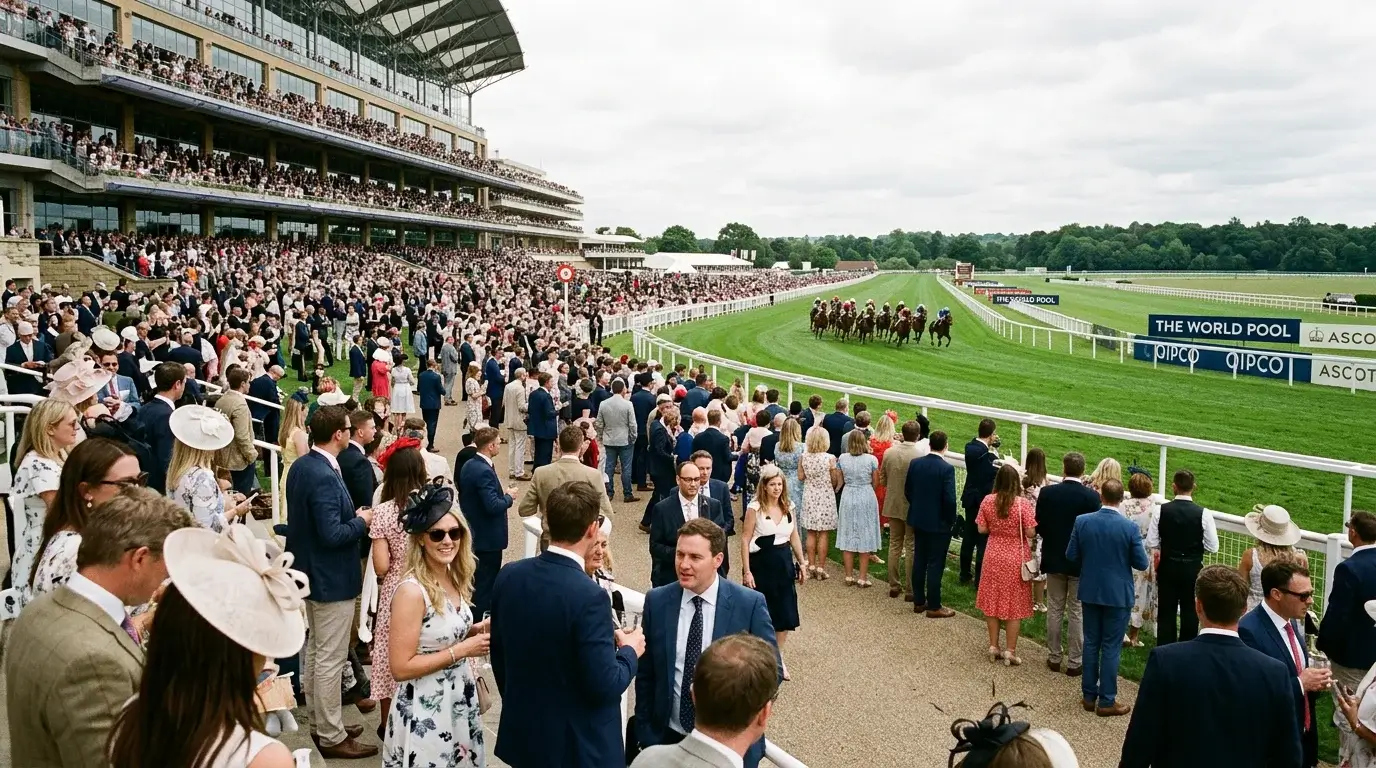
World Pool days now feature regularly at major UK meetings. Cheltenham Festival, Royal Ascot, the Guineas weekend at Newmarket, and selected championship race days at Sandown and Ascot all benefit from commingled liquidity. On these occasions, most World Pool days amass over HK$300 million in combined turnover, equivalent to roughly £29 million, dwarfing anything purely domestic pools could achieve.
For punters, World Pool integration means two practical considerations. First, probable dividends displayed may shift more rapidly as global money enters the pools, so timing your bet requires attention. Second, the dividend you receive reflects global, not local, betting patterns. A horse heavily backed in Hong Kong but overlooked in Britain might pay less than domestic-only pools would suggest, and vice versa.
Non-runner rules apply standard Tote protocols. If one of your boxed selections withdraws before the off, the Tote applies deductions to your stake based on the withdrawn horse's odds at the time of withdrawal. Your bet remains active on the remaining combinations, but the total stake reduces proportionally. Dead heats divide the winning pool portion between affected combinations according to published rules.
Tote Exacta vs CSF: Which Pays Better?
The Computer Straight Forecast, universally known as CSF, represents the bookmaker alternative to Tote Exacta pools. Rather than pari-mutuel pool dynamics, CSF returns are calculated using an algorithm based on the starting prices of the first two finishers. This fundamental difference creates distinct value profiles that informed punters can exploit.
Aggregate data strongly favours the Tote Exacta in head-to-head comparisons. Analysis from UK Tote Group shows that Tote Exacta beat CSF in 73% of races, returning 30% more on average. These are not marginal differences: over a sustained betting period, consistently choosing the higher-paying product compounds into substantial additional returns.
Why does Tote Exacta outperform so frequently? The CSF algorithm relies on starting prices, which themselves contain bookmaker margins. When those margined prices feed into the CSF calculation, the embedded overround reduces potential payouts. Pool betting, while carrying its own deduction, reflects actual money wagered rather than prices constructed to guarantee bookmaker profit regardless of outcome.
Tote Exacta outpays CSF in 73% of races with 30% higher average returns. The CSF algorithm embeds bookmaker margins that suppress dividends.
The 27% of races where CSF pays better typically share common characteristics. Short-priced favourites winning with another well-backed horse second often produce CSF returns that edge Tote dividends. In these scenarios, the pool betting money concentrates heavily on the winning combination, diluting individual payouts, while the CSF algorithm simply multiplies two low SPs together without pool dilution effects.
Conversely, Tote Exacta excels when at least one unexposed or overlaid horse features in the first two. Public money gravitates toward form horses and favourites, leaving less obvious combinations underbet relative to true probability. When these combinations hit, the winning pool portion receives a larger share of the total pool, producing dividends that exceed CSF calculations.
"Today marks the start of an exciting new era for the Tote. Pool betting plays a leading role in racing jurisdictions around the world and we believe the Tote can play a similar role in the UK, while supporting and growing British racing in the years ahead," noted Alex Frost upon the Tote's repositioning in the UK market. That confidence in pool betting's value proposition is supported by the performance data.
| Scenario | Likely Better Payout |
|---|---|
| Two well-backed horses fill the frame | Often CSF |
| At least one overlooked horse finishes 1st or 2nd | Usually Tote Exacta |
| World Pool race with deep liquidity | Tote Exacta favoured |
| Small domestic pool with heavy favourite | Compare probables carefully |
Strategic punters check both products before committing significant stakes. The Tote displays probable dividends that update as the pool develops, while bookmakers publish CSF guides based on current market prices. When your boxed combination shows substantially better value in one product over the other, take the superior option. Loyalty to either product costs money over time.
How Exacta Payouts Are Calculated
Exacta dividends emerge from straightforward arithmetic applied to the pool after deductions. Understanding this calculation demystifies why some exactas pay handsomely while others disappoint, and reveals why pool size matters for outcome stability.
The calculation proceeds in three steps. First, the Tote totals all money wagered into the Exacta pool for that race. Second, the operator deducts 25%, the standard UK Tote Exacta takeout. Third, the remaining pool divides among winning ticket holders in proportion to their stake.
Dividend Calculation
Total Pool: £80,000
Deduction (25%): £20,000
Net Pool: £60,000
Stakes on Winning Combination: £3,000
Dividend: £60,000 ÷ £3,000 = £20.00 per £1 unit
The formula reveals why longshot combinations pay dramatically more than favourite-laden results. When public money concentrates on obvious combinations, those combinations represent a larger share of the pool. Winning them returns a smaller proportional payout. When an overlooked combination wins, fewer tickets claim that pool share, and individual dividends swell accordingly.
Pool size affects dividend stability. Small pools are vulnerable to individual large bets skewing the payout structure. If one punter places a substantial stake on a specific combination and that combination wins, the dividend for everyone on that combination decreases. Larger pools dilute the impact of individual bets, producing dividends that more accurately reflect aggregate market assessment of probability.
This explains the appeal of World Pool days. When UK pool money combines with global wagering, the resulting pool depth protects against local distortions. A British punter backing an unfancied horse in a £200,000 combined pool has far less impact on the dividend than the same bet in a £20,000 domestic pool.
Probable dividends displayed during betting are projections based on current pool composition, not guarantees. As late money arrives, particularly in the final minutes before the off, probables shift. Professional bettors monitor these movements for information: sudden drops in certain combinations' probables may indicate informed money arriving on those outcomes.
For boxed bets, remember that only one combination pays. If you box three horses and two of them finish first and second, only the £1 portion of your £6 stake allocated to that specific order wins. The remaining five combinations expire worthless. Your actual return is the dividend multiplied by your unit stake on the winning combination alone, not your total stake.
Real UK Exacta Payouts: Case Studies
Theory matters less than results. These real-world examples from British racing demonstrate how exacta dividends materialise in practice, illustrating the variables that separate modest returns from genuinely substantial payouts.
Cheltenham Gold Cup 2014: The Longshot Exacta
The 2014 Cheltenham Gold Cup produced one of the more memorable exacta results in Festival history. Lord Windermere, available at 20/1, edged out On His Own at 16/1 in a driving finish up the famous hill. Neither horse was among the market leaders, and punters holding the Lord Windermere/On His Own exacta found themselves on the right side of generous dividends.
The Tote Exacta paid £358.20 for the £1 unit, reflecting how little of the pool had concentrated on that specific combination. For punters who had boxed both horses, the £358.20 return on a £2 total stake represented exceptional value, demonstrating how genuine form study identifying overlooked contenders can produce outsized rewards when the public betting pattern underweights those possibilities.
The 2014 Gold Cup Exacta paying £358.20 exceeded the combined starting price forecast of the two horses, illustrating how pool dynamics can generate value beyond fixed-odds expectations.
Royal Ascot World Pool Integration
Royal Ascot now operates as a flagship World Pool meeting, with commingled liquidity reaching unprecedented levels. Royal Ascot 2025 saw World Pool turnover reach £150 million, a 10% increase year-on-year, demonstrating growing punter engagement with pool betting on the sport's biggest stage.
The scale benefits become tangible in dividend quality. "The World Pool days produce a major additional income for racecourses like Ascot, between £500,000 and £800,000 per race day which makes a major difference to the bottom line," explained Winfried Engelbrecht-Bresges, CEO of the Hong Kong Jockey Club. For punters, that income generation correlates with pool depth that stabilises dividends and reduces the variance that smaller domestic pools introduce.
Rashabar at Royal Ascot 2024
A specific example demonstrates World Pool value in action. When Rashabar won at Royal Ascot 2024, the World Pool dividend returned 129.90, notably exceeding the starting price equivalent of 80/1. This 60% premium above SP illustrates how commingled pools can produce genuine value exceeding the fixed-odds market, particularly for horses that British money overlooked but global punters assessed differently.
The Rashabar example encapsulates the core appeal of pool betting on major international days: you are not competing against a bookmaker margin on fixed odds, but participating in a global market where consensus views from Hong Kong, Australia, and continental Europe combine with British assessment. When those views diverge in your favour, the returns can be substantial.
World Pool Growth Trajectory
The 2025 racing season continued World Pool's upward trajectory. UK and Ireland World Pool turnover reached record levels of HK$5.1 billion, equivalent to approximately £490 million across participating meetings. "World Pool has provided many benefits to the global horse racing industry including deep and liquid pari-mutuel pools on the world's best races," observed Winfried Engelbrecht-Bresges, highlighting the symbiotic relationship between global participation and quality betting opportunities.
For UK punters, these figures translate into practical advantages. More money in the pools means larger available dividends, more accurate probability reflection, and reduced susceptibility to individual large bets distorting returns. The days of thin domestic pools being manipulated by a single shrewd operator are diminishing on major race days.
Exacta Box Strategy for UK Racing
Profitable exacta betting requires more than mechanical application of formulas. Strategic bettors identify races where exacta structures offer genuine edge, then construct bets that maximise return relative to outlay. These principles apply whether you are betting through the Tote or using bookmaker forecasts.
Field Size Considerations
Mid-sized fields of eight to twelve runners typically offer the best exacta box opportunities. Smaller fields concentrate probability on fewer horses, reducing potential dividends and often creating favourites so short that covering them eliminates value. Larger fields spread probability across so many potential combinations that your box costs balloon without proportional dividend increases.
The spring 2026 Flat season offers numerous competitive handicaps fitting this profile, particularly at Newmarket and York where quality fields assemble without dominant market leaders. In competitive handicaps with twelve runners and no standout favourite, the first two positions could reasonably be filled by six or seven horses. Boxing all seven costs £42 at £1 units, but the dividend for a successful combination involving two 8/1 shots might reach £150-200, delivering genuine profit. The same £42 in a six-runner conditions stakes with a 1/2 favourite yields neither the dividend potential nor the value.
Favourite Vulnerability
The most profitable exacta scenarios often involve beatable favourites. When the market installs a vulnerable favourite, public money concentrates on combinations involving that horse. If the favourite fails to win but your boxed selections do, you capture a larger pool share because fewer tickets cover your winning combination.
Identifying favourite vulnerability requires form study beyond headline figures. Ground conditions shifting against the favourite's profile, first-time headgear experiments from improvers in the field, trainers in form with less-hyped runners: these angles create scenarios where the betting public underestimates the probability of exacta combinations that exclude the market leader.
Value Identification
Compare probable dividends against your own probability assessment. If you believe two horses each have roughly a 15% chance of winning and finishing second interchangeably, their boxed combination probability approximates 4.5% when calculated properly. A £1 box costs £2, requiring a dividend of at least £45 to represent neutral expectation. If probables show £60, the bet has positive expected value. If probables show £35, you are paying above fair value for the coverage.
The data supports Tote value on World Pool days. A £1 bet with the Tote on every winner on British and Irish World Pool days in 2025 paid £171.44 more than the industry Starting Price, demonstrating consistent value creation across the season.
This calculation sounds complex but becomes second nature with practice. The key insight is that not every winning bet delivers value. Hitting an exacta that pays less than probability suggested destroys bankroll over time just as surely as missing bets.
Bankroll Management
Exotic bets carry higher variance than win betting. A disciplined bettor allocates specific percentages of their bankroll to exacta plays, never risking total bankroll on a single race regardless of conviction level. A common guideline suggests limiting any single exacta stake to 2-3% of total betting bankroll, allowing for the inevitable losing runs without catastrophic impact.
This growth in UK pool betting suggests punters are finding value. The overall UK and Irish pool increased by 50% with over 100,000 active online customers participating in major meetings. That growth reflects sophisticated bettors recognising pool betting's potential rather than simply chasing gambles.
Timing Your Bet
Late money often carries information. Professional bettors frequently wait until the final minutes before the off to assess where the smart money has flowed, then position accordingly. If your intended combination's probable dividend has collapsed in the final minutes, sharp money may have arrived on that outcome, potentially reducing your value. Conversely, if your combination's probable holds steady while others drop, relative value has improved.
Exactaboxbet tool · value filter
Box Value Filter: which legs of your box are worth backing
A box buys every finishing order at the same price, but the pool does not price every order the same way. Put in the market price and your own honest price for each runner, and this works out what each combination has to return, what the pool is likely to pay it, and which legs you are funding for nothing.
Fractional or decimal both work: 7/2, evens, 4.50. Your price is what you make the runner before any margin.
Full box
−1.3%
expected return per £1 staked
Cost £12.00
Hit chance 37.0%
Filtered box
+16.4%
expected return per £1 staked
Legs kept 6 of 12
Cost £6.00
Hit chance 11.7%
Cut 6 of 12 combinations and the same opinion costs £6.00 less. The dropped legs are the ones the pool has already priced past your view.
Every combination, ranked
- B → Cneeds £32.00 · pool pays £39.03+22.0%
- C → Bneeds £35.00 · pool pays £42.57+21.6%
- C → Dneeds £91.00 · pool pays £110.68+21.6%
- D → Cneeds £96.00 · pool pays £114.22+19.0%
- B → Dneeds £52.00 · pool pays £56.37+8.4%
- D → Bneeds £60.00 · pool pays £63.45+5.8%
- C → Aneeds £28.00 · pool pays £25.54−8.8%
- A → Cneeds £24.00 · pool pays £20.23−15.7%
- B → Aneeds £16.00 · pool pays £13.01−18.7%
- D → Aneeds £48.00 · pool pays £38.07−20.7%
- A → Dneeds £39.00 · pool pays £29.22−25.1%
- A → Bneeds £15.00 · pool pays £11.24−25.1%
Method: your prices become win probabilities and are turned into finishing-order probabilities with the standard Harville model; market prices are deflated by the book percentage first, then the likely pool dividend is the takeout-adjusted inverse of that combination's share. Estimates only, based on the prices you enter — no model guarantees a return. 18+. Bet only what you can afford to lose.
Common Exacta Box Mistakes to Avoid
Even experienced punters make errors that erode exacta profitability. Recognising these patterns in your own betting helps preserve bankroll and improve long-term returns.
Over-Boxing as Default
The most prevalent mistake is treating boxes as insurance rather than precision tools. Boxing five or six horses in every race because you "cannot separate them" usually reflects insufficient analysis rather than genuine uncertainty. If you cannot narrow to three or four genuine contenders through form study, you probably lack sufficient edge to be betting the exacta at all.
Over-boxing destroys value mathematically. A six-horse box costs 30 combinations. For that £30 to break even, the dividend must average at least £30. When one of your horses is the favourite finishing first with another well-backed runner second, that dividend rarely materialises. You have paid premium price for coverage that returns discount dividends.
Ignoring Pool Size
Small pools behave differently than large pools. When total pool money is limited, a few substantial bets can skew dividends dramatically. Probable payouts displayed early in the betting cycle become unreliable guides, and your actual return may fall well short of expectations.
For smaller meetings with thin exacta pools, consider whether bookmaker forecasts offer better value despite their algorithmic limitations. The stability of CSF returns sometimes outweighs the theoretical advantage of pool betting when pools lack depth.
Chasing Longshots Incorrectly
Longshot exactas represent the dream scenario: two horses nobody fancied finishing first and second, producing a dividend that funds a month of betting. But chasing these outcomes through indiscriminate boxing of outsiders misunderstands probability. Three genuine 20/1 shots boxed together might yield £800+ if they complete the exacta, but the probability of that outcome is minuscule. Your £6 box stake will lose far more often than the occasional windfall compensates.
The correct approach identifies overlaid horses, those whose true probability exceeds what the market suggests, and constructs boxes around them. A 12/1 shot that your analysis suggests should be 6/1 offers genuine value. A 33/1 shot that should be 50/1 according to form does not, regardless of the potential dividend.
Neglecting to Compare Products
Placing Tote Exactas without checking CSF prices, or vice versa, leaves money on the table. The 73% strike rate for Tote Exacta over CSF means CSF pays better 27% of the time. Failing to compare products means occasionally accepting inferior returns when better options exist.
Before committing stakes, check probable dividends against CSF guides. Take the better value product for each race individually rather than defaulting to one product across your entire card.
Emotional Betting After Losses
Exactas carry high variance. Losing runs are inevitable even for skilled bettors. The emotional response to losses often involves increasing stakes or expanding boxes to "get back on track." Both adjustments typically accelerate losses rather than reversing them. Maintain disciplined staking regardless of recent results, trusting the process over the short-term outcome.
Frequently Asked Questions
What happens to my exacta box bet if one of my horses is a non-runner?
When a horse in your exacta box is declared a non-runner before the race, the Tote applies deductions to your stake based on that horse's odds at withdrawal. Your bet continues covering the remaining horses, but the stake allocated to combinations involving the withdrawn horse reduces according to published deduction rules. For example, if you boxed three horses and one becomes a non-runner, your bet effectively becomes a two-horse box with reduced stake. The remaining combinations still pay full dividends if successful, but your total stake commitment decreases proportionally.
How are exacta dividends calculated in a dead heat?
Dead heats for first place create multiple winning exacta combinations. If two horses dead heat for the win with a third horse finishing second, both exacta combinations involving the dead-heaters finishing first with the third horse second become winning combinations. The pool divides accordingly, with the total prize money split between all winning tickets across both valid combinations. Your dividend reflects your proportional share of the relevant portion. Dead heats for second place do not affect exacta payouts since only the horse officially placed second counts for dividend purposes.
What is the minimum stake for a Tote Exacta in the UK?
The minimum total stake for a UK Tote Exacta is £2. However, flexi betting allows unit stakes as low as £0.10 per combination, provided the total bet reaches the £2 minimum. This means you can construct a 20-combination box, equivalent to boxing five horses, for just £2 total at 10p units. Larger combinations at minimum flexi stakes require proportionally higher total bets. Standard £1 unit bets simply cost the number of combinations multiplied by £1, with no minimum threshold concerns.
Responsible Gambling Notice
Exacta betting should always occur within the boundaries of responsible gambling practice. UK betting operators are licensed by the Gambling Commission and required to provide tools that help you maintain control over your betting activity.
Set personal limits before you begin betting. Determine how much you can afford to lose without impacting your essential expenses, and treat that figure as a hard ceiling. Many UK betting platforms allow you to set daily, weekly, or monthly deposit limits that enforce this discipline automatically. Take advantage of these tools.
If you feel your gambling is becoming problematic, support is available. The National Gambling Helpline, operated by GamCare, provides free, confidential support 24 hours a day on 0808 8020 133. BeGambleAware offers resources and guidance at begambleaware.org. Self-exclusion schemes like GAMSTOP allow you to restrict your access to licensed UK gambling operators for periods of six months to five years.
Remember that no betting strategy, including the approaches discussed in this guide, guarantees profit. Exacta betting carries inherent variance, and losing streaks are mathematically inevitable regardless of skill level. Bet only what you can afford to lose, and never chase losses by increasing stakes beyond your predetermined limits.
