
 Available in US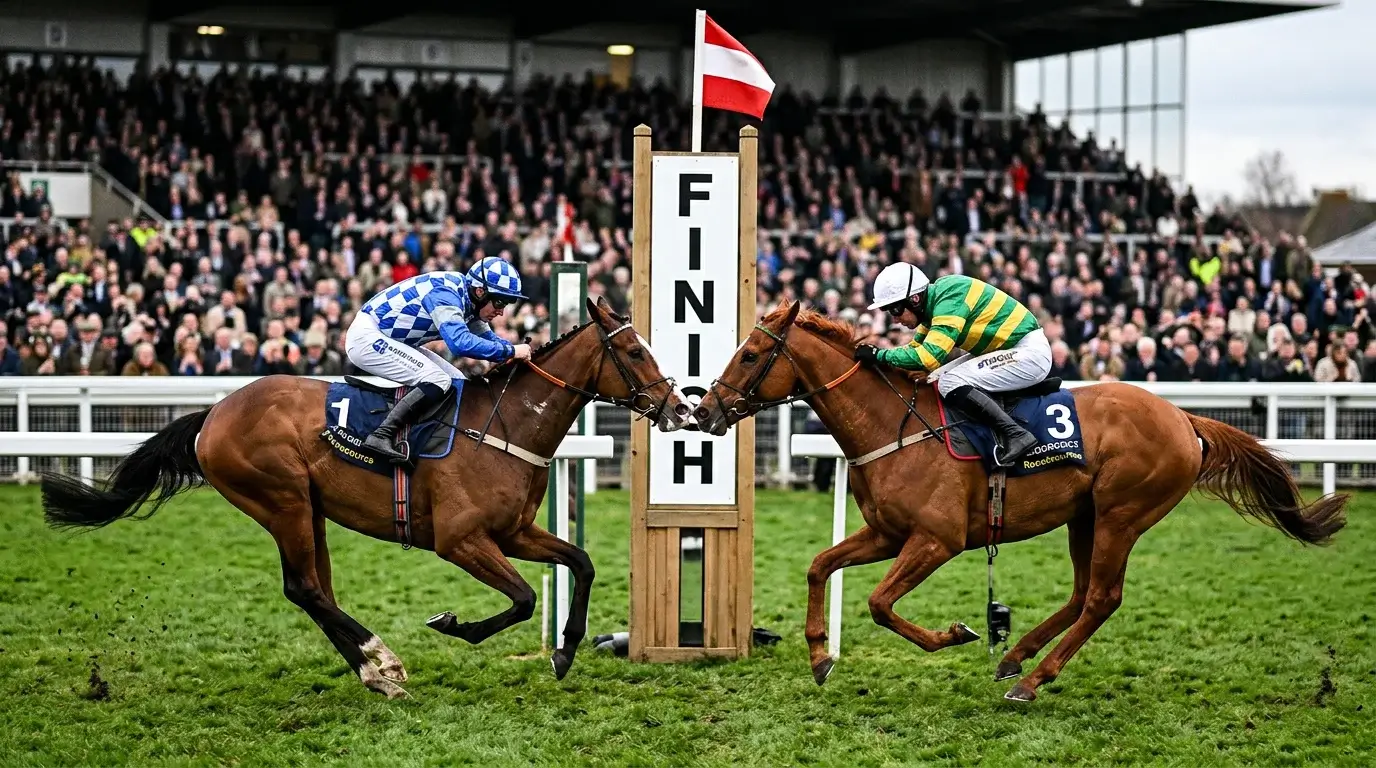
Contents
Dead heats occur rarely in horse racing, but when they do, the settlement of exacta bets becomes considerably more complex. Two horses crossing the line simultaneously, or so close that the photo finish camera cannot separate them, creates multiple winning combinations from a single race. Understanding exacta dead heat rules prevents confusion when this unusual scenario affects your bet.
The rarity of dead heats does not diminish their importance. When two horses cannot be separated, the standard rules of exacta settlement must accommodate outcomes the bet structure was not primarily designed for. The pool must distribute among more winning combinations than anticipated, and your potential dividend adjusts accordingly.
Dead heat scenarios reward punters who backed combinations involving the tied horses while presenting unexpected payouts for those who never considered such an outcome possible. When two cannot be separated, the rules ensure fair treatment for all winning tickets while maintaining the integrity of the pari-mutuel calculation.
For exacta box cost tools visit exacta box bet.
What Is a Dead Heat?
A dead heat occurs when two or more horses finish a race so close together that they cannot be separated by the photo finish camera. The judge declares them joint winners, or joint holders of whatever position the tie affects. For exacta purposes, a dead heat for first creates two horses sharing the winning position, while a dead heat for second creates two horses sharing runner-up honours.
Modern photo finish technology captures images at remarkably high resolution, often separating horses that appear tied to the naked eye. The camera identifies the moment each horse’s nose crosses the line, typically resolving finishes down to thousandths of a second. Only when this technology genuinely cannot distinguish between horses does a dead heat occur.
The official declaration comes from the racecourse judge after reviewing the photo finish image. Until this declaration, results remain provisional. Dead heats are announced alongside the official result, specifying which horses share which position. This announcement determines how exotic bets, including exactas, settle.
Pool betting generally outperforms fixed-odds alternatives for exotic bets in UK racing. According to UK Tote Group data, Tote Trifecta beat the fixed-odds Tricast in 74 percent of races, returning on average 57 percent more. This pattern extends to exactas, where pool dividends frequently exceed Computer Straight Forecast returns. Dead heat scenarios add complexity but follow the same fundamental pool calculation principles.
How Exacta Dead Heats Settle
When a dead heat affects exacta settlement, multiple combinations become winners. A dead heat for first between horses A and B, with horse C finishing second, creates two winning exacta combinations: A first with C second, and B first with C second. Both combinations receive a share of the exacta pool.
The pool calculation proceeds normally until dividend distribution. The gross pool accumulates all exacta bets, the standard 25 percent deduction applies according to the Tote’s betting rules, and the net pool remains for distribution. However, instead of dividing among tickets on one combination, the net pool divides among tickets on all winning combinations created by the dead heat.
Consider a worked example. A race generates £30,000 in exacta bets. After deduction, £22,500 remains in the net pool. A dead heat for first occurs between horses A and B, with horse C second. Punters placed £300 on A-C (300 units) and £150 on B-C (150 units). Total winning units: 450. The dividend per unit: £22,500 ÷ 450 = £50. Both combinations pay £50 per £1 stake.
A dead heat for second operates similarly. Horse A wins clearly, but horses B and C dead heat for second. Two winning combinations emerge: A-B and A-C. The pool distributes among both. If £400 was bet on A-B (400 units) and £200 on A-C (200 units), the total winning units are 600. Using the same £22,500 net pool: £22,500 ÷ 600 = £37.50 per unit.
Three-way dead heats multiply the winning combinations further, though such outcomes are exceptionally rare. The principle remains constant: identify all combinations that satisfy the dead heat result, total the winning units across all combinations, and divide the net pool accordingly.
Impact on Your Payout
Dead heats generally reduce individual dividends because more winning tickets share the pool. If you backed combination A-C and a dead heat creates both A-C and B-C as winners, your payout depends on how much money was bet on B-C. Heavy backing on the additional winning combination diminishes your return; light backing on it leaves more pool for your ticket.
The mathematics works against punters who backed obvious combinations. If the dead heat involves two favourites, both combinations likely attracted significant money. The pool spreads widely, and dividends fall. If the dead heat involves a favourite and a longer-priced horse, the unexpected combination probably attracted less backing, preserving more of the pool for the obvious combination.
Counterintuitively, dead heats can occasionally benefit punters. If you backed a combination involving a longer-priced horse that dead heated, you might receive a better dividend than a standard win would have produced. The dead heat brings additional winning units into play, but if your combination attracted minimal backing while the other drew heavy money, the pool division could favour you.
Evaluating dead heat impact requires knowing both the pool distribution and the specific combination you backed. The Tote results page displays dead heat dividends for each winning combination, allowing direct comparison. These dividends reflect the actual pool calculation rather than any notional adjustment, so what you see is what you receive.
For straight exacta bettors who backed only one ordering, a dead heat means you either won at a reduced dividend or did not have a winning combination at all. Boxing provides natural protection by covering multiple orderings, increasing your chances of holding at least one winning combination when dead heats complicate the finish.
Dead Heat in Boxed Exactas
Boxing your selections provides inherent dead heat coverage. A two-horse box covering A-B and B-A benefits if either horse dead heats for first or second with a third horse. You already hold one winning combination; the dead heat creates an additional winner that does not affect your entitlement to the dividend for your combination.
Larger boxes expand this protection. A four-horse box covering twelve combinations has multiple potential winning tickets in any dead heat scenario involving your selections. If two of your horses dead heat for first with a third of your horses second, you hold both winning combinations. The dividends might be reduced by dead heat dynamics, but you collect twice.
See also: exacta non-runner rules — what happens to your exacta when a horse withdraws.
Multiple payouts from a single race represent the best-case dead heat scenario for boxed exacta bettors. Your total return aggregates the dividends from each winning combination you hold. If your box contained A-B and B-A, and both A and B dead heated for first with C second, you receive the A-C dividend and the B-C dividend. Two winning combinations from a single bet.
The cost of boxing makes this coverage more valuable. You paid for multiple combinations explicitly to avoid guessing the exact order. Dead heats reward this approach by potentially delivering returns from combinations you specifically paid to include. The insurance you purchased pays out in the scenario where precision was genuinely impossible.
Dead heats for second present similar opportunities for boxed bettors. If your box included the clear winner with multiple second-place options, a dead heat for second might land two of your combinations as winners. The reduced dividend per combination multiplies across your holdings, potentially exceeding what a single-combination win would have paid.
