
 Available in US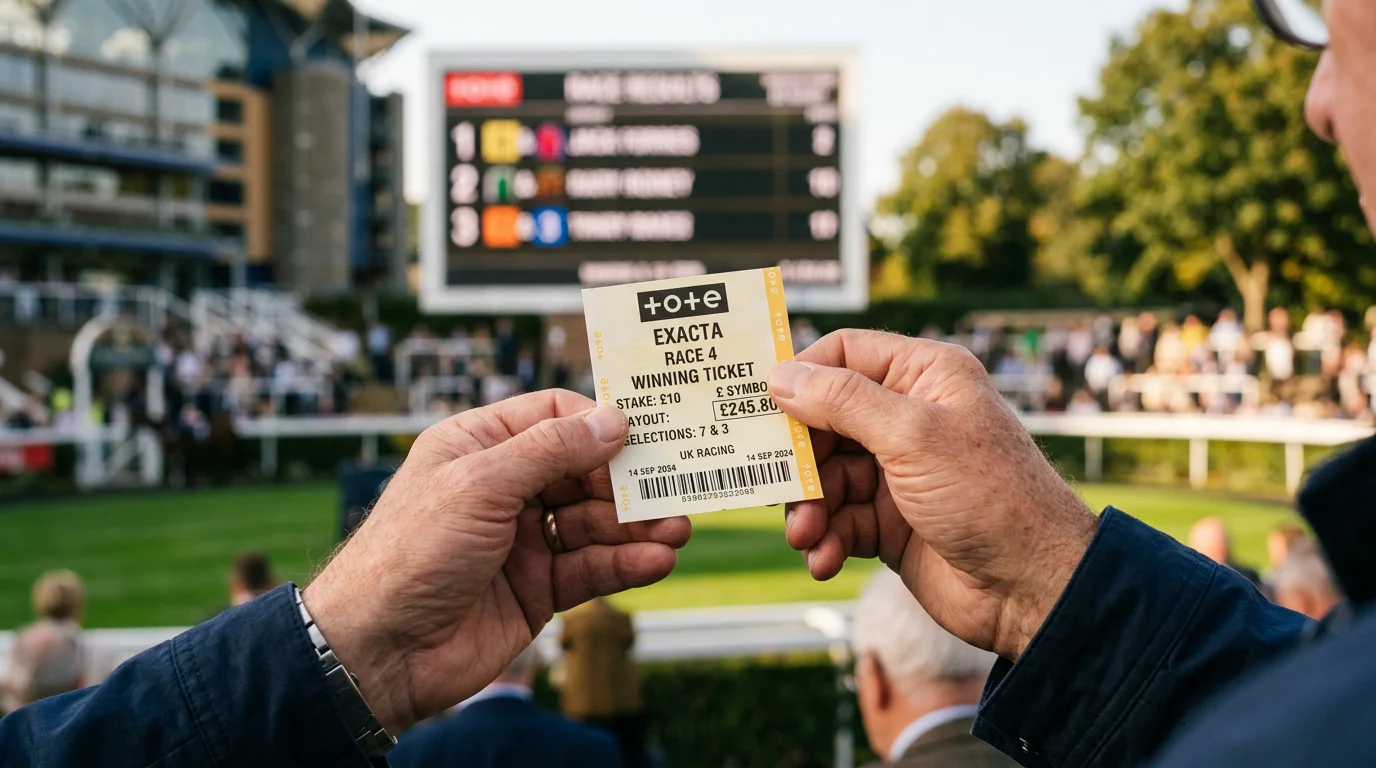
Contents
Understanding how exacta payouts are calculated transforms the bet from a lottery ticket into a considered investment. Every punter who places an exacta box should know where their potential winnings come from and why dividends fluctuate between races. The mechanics are not complex, but they differ fundamentally from fixed-odds betting.
Pool betting operates on a simple principle: all stakes go into a common pot, the operator takes a percentage, and the remainder is divided among winning tickets. This pari-mutuel system means you are betting against other punters rather than against the bookmaker’s margin. The exacta pool aggregates every exacta bet placed on a race, creating a fund from which all winning combinations draw their payouts.
What makes exacta box payouts particularly interesting is the variability. Two races on the same card might produce vastly different dividends for similarly priced combinations. A heavily backed favourite finishing first and second with another short-priced runner yields modest returns because many tickets share the pool. An unexpected result with longer-priced horses concentrates the payout among fewer winners, sometimes producing substantial dividends.
Understanding the maths behind your winnings enables better decision-making. You can assess whether a potential combination offers value relative to its probability, compare pool dividends with fixed-odds forecasts, and structure your exacta betting around races where the pool dynamics favour larger returns.
For UK exacta box guides visit exacta box bet.
The Pool System Explained
Every exacta bet placed on a race joins the same pool regardless of which combination the punter selected. If a race attracts £50,000 in total exacta bets, that money forms the gross pool. The Tote then applies a deduction, retaining a percentage to cover operational costs, contribute to racing prize funds, and generate margin. What remains after this deduction is the net pool, the actual money available for distribution to winning bettors.
The Tote’s official betting rules specify different deduction rates for different pool types. The Win pool operates with a 19.25 percent deduction, while the Trifecta pool carries a 25 percent takeout. This variation reflects the complexity and expected turnover of different bet types. More exotic bets typically carry higher deductions because they require more infrastructure to operate and historically attract lower volumes.
Once deductions are removed, the net pool is divided among all winning units. A unit is typically £1. If you bet £5 on the winning combination, you hold five units. The dividend paid per unit depends on how many total winning units exist across all punters. Fewer winning tickets mean each unit claims a larger share of the pool.
This redistribution mechanism creates the pari-mutuel dynamic. You are not betting against house odds; you are competing with every other exacta bettor for a share of the collective pot. If a favourite-dominated result attracts heavy backing, winners share the pool widely and dividends shrink. If an unexpected combination lands, winning tickets are scarce and dividends grow. The pool reflects collective opinion, and going against that opinion when correct pays substantially better.
Pool size matters for stability. Larger pools smooth out the impact of individual large bets. Smaller pools on midweek racing can swing dramatically if one punter places a significant stake. This is why major meetings like Royal Ascot and the Cheltenham Festival, where exacta pools often exceed six figures, tend to produce more predictable dividend ranges than a quiet Tuesday at Sedgefield.
Calculating the Dividend
The dividend calculation follows a clear formula. Take the gross pool, subtract the deduction percentage, then divide by the number of winning units. The result is the dividend paid per £1 unit stake. This figure appears on Tote result boards and websites as the official exacta payout.
Consider a worked example. A race generates £40,000 in exacta bets across all combinations. After the 25 percent deduction, £30,000 remains in the net pool. The winning combination was Horse A first and Horse B second. Punters placed £600 on this exact combination, representing 600 winning units. The dividend calculation divides £30,000 by 600, producing a £50 dividend. Every £1 staked on that combination returns £50.
Now imagine the same race but with a different outcome. Horse C finishes first with Horse D second, a combination that only attracted £150 in bets, or 150 winning units. The same £30,000 net pool divided by 150 units yields a £200 dividend. The pool amount is identical; only the distribution changes based on how many punters backed the result.
Boxed exactas receive the dividend for whichever combination won. If you boxed Horse A with Horse B and the result was A first, B second, you receive the dividend for that specific ordering. Your box covered both possibilities, but only the actual result pays. The other combination in your box becomes irrelevant. This is why a two-horse box costs twice a straight exacta: you are buying two chances at the dividend, but only one can pay.
Multiple winning combinations occur only in dead heats, where two horses cannot be separated for a finishing position. In such cases, the pool is divided among all affected combinations, and each winning unit receives a smaller share. Dead heats reduce dividends proportionally since more outcomes are considered winning.
The dividend displayed by the Tote is always calculated to a £1 unit stake. If you bet £2 per combination, double the dividend for your return. A £50 dividend on a £2 stake returns £100. Simple multiplication scales the base dividend to your actual stake.
Deduction Rates and What You Actually Win
The 25 percent deduction on UK Tote Exacta pools directly affects every winning punter. Of every pound bet into the exacta pool, 75 pence goes to winners and 25 pence funds the operation and British racing itself. This takeout is higher than some international pari-mutuel operations but comparable to other UK exotic pools.
Comparing deduction rates across pool types reveals the cost structure. Win pools carry the lowest deduction at 19.25 percent, reflecting their simplicity and volume. Place pools also sit lower. The Trifecta pool, requiring three horses in exact order, shares the Exacta’s 25 percent deduction. These rates are published in the Tote’s betting rules document and remain consistent across meetings.
How does this affect your returns compared to fixed-odds betting? The Computer Straight Forecast, the bookmaker equivalent of an exacta, builds margin differently. Fixed odds incorporate the bookmaker’s edge into the prices themselves, so the effective takeout is hidden within the odds structure. Pool betting exposes its deduction transparently, making comparison slightly more complex.
What matters is the final dividend relative to the fixed-odds alternative. On short-priced combinations, fixed odds often return more because the deduction percentage hits harder when the pool is concentrated on popular selections. On longer-priced combinations, particularly upsets, pool betting frequently outperforms. The aggregated betting public tends to underestimate unlikely outcomes, leaving value in the exacta pool for punters who backed against the crowd.
The deduction funds racing directly. A portion flows to prize money and industry development through the Horserace Betting Levy Board. When you bet into UK Tote pools, your stake contributes to the sport. This structural link distinguishes pool betting from offshore fixed-odds operators whose connections to British racing are more tenuous.
Reading Tote Payouts
Tote results display dividends in a consistent format once you understand the conventions. The exacta dividend appears as a single figure representing the return to a £1 stake. If the displayed dividend is £47.30, a £1 winning unit returns exactly £47.30. This total includes your original stake, so the profit portion is £46.30.
Results pages list the exacta alongside other pool dividends for each race. The winning combination is stated explicitly, showing which horse finished first and which second. The dividend applies only to that specific combination. Even if you boxed your selections, your payout derives from the actual finishing order, not from both possibilities.
See also: quadpot and placepot — beyond single-race exacta with multi-race bets.
Decimal format dominates UK Tote displays, distinguishing them from the traditional fractional odds used by bookmakers. A dividend of £8.50 means precisely what it says: eight pounds and fifty pence returned per pound staked. No mental conversion required. This clarity helps punters assess returns quickly and compare across races.
Historical dividends offer insight into typical ranges. Small field races with dominant favourites often produce single-figure exacta dividends. Competitive handicaps with open betting can reach three figures comfortably. Exceptional results, where outsiders fill the first two places, occasionally push into four figures. These patterns help calibrate expectations. Expecting a £200 dividend from a six-runner race with two short-priced horses is unrealistic; the pool distribution will not support it.
Probable payouts sometimes appear before a race concludes, offering a preview of approximate dividends based on current pool distributions. These figures shift as late money arrives and should be treated as indicative rather than definitive. The final dividend is calculated only after betting closes and the result is official. What you see mid-race may differ substantially from the actual payout.
