
 Available in US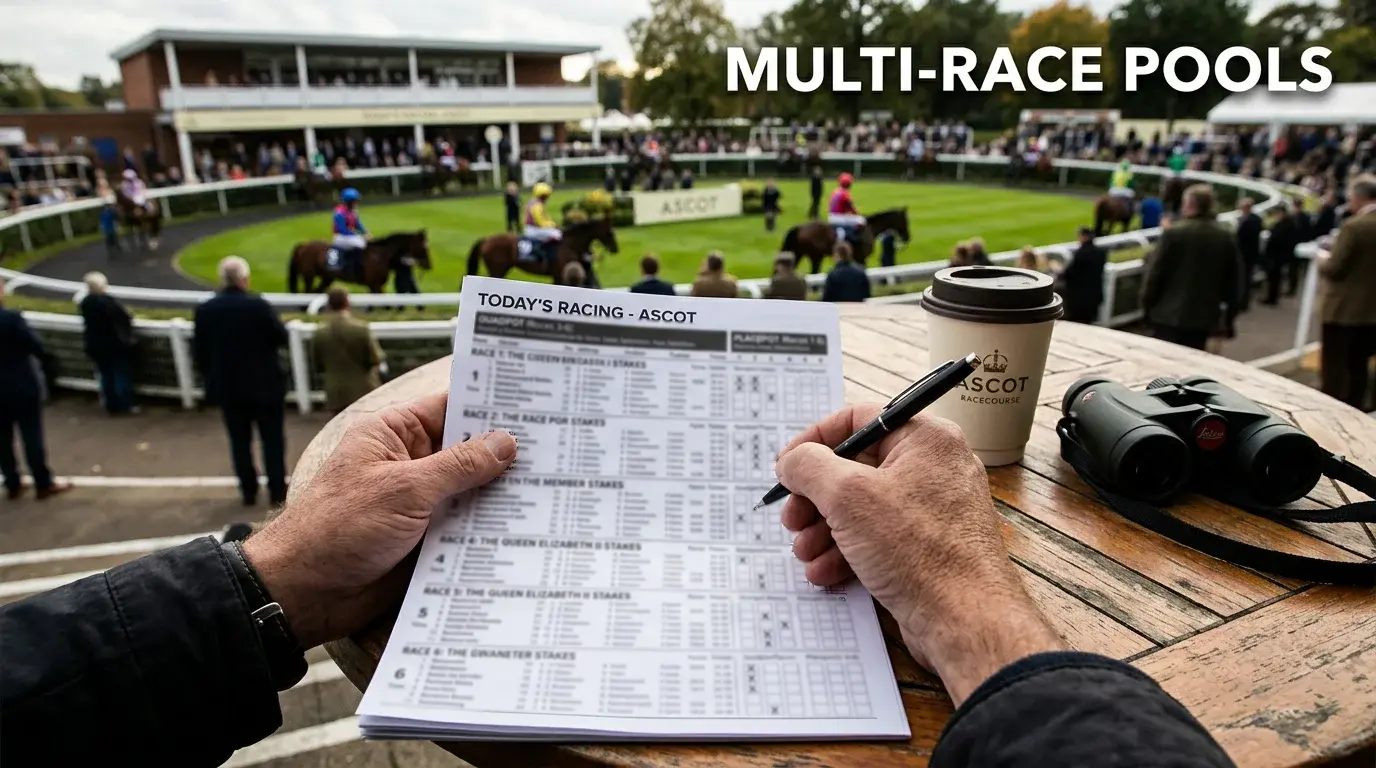
Contents
Pool betting extends well beyond single-race exotics like the exacta. The Tote’s Placepot and Quadpot offer multi-race challenges that reward sustained analysis across entire meeting cards. These horizontal exotics complement exacta betting, providing different risk-reward profiles that diversify your pool betting portfolio.
Both bets require finding placed horses across multiple races rather than predicting exact finishing orders. This shift from precision to consistency creates opportunities for punters whose strength lies in identifying competitive horses rather than separating first from second.
The multi-race format creates extended engagement with a meeting. Rather than resolving each bet within minutes, Placepot and Quadpot success or failure unfolds across hours. This journey, with its progressive elimination of rival tickets, generates different emotional experiences than single-race betting.
Spread your pools, spread your chances. Understanding how Placepot and Quadpot work alongside exacta betting enables strategic allocation across bet types, matching each race’s characteristics to the most appropriate pool opportunity.
Exacta tools and strategies at exacta box bet.
Placepot Explained
The Placepot requires selecting a placed horse in each of the first six races on a card. Place terms follow standard rules: first through fourth in handicaps with sixteen or more runners, first through third in fields of eight to fifteen, first and second in fields of five to seven, and the winner only in fields of four or fewer.
Your ticket survives through each race by having at least one selection place. Multiple selections per race are permitted, creating perm-style coverage where any of your chosen horses placing keeps you alive for subsequent legs. The cost multiplies with each additional selection: two horses in one race doubles the base stake for that element.
The UK Tote has invested over £100 million to support pool growth, with the Placepot being one of the most popular beneficiary products. Major meetings generate substantial Placepot pools, sometimes exceeding £500,000, which produces stable dividends even when results favour the obvious.
Dividend calculation follows pari-mutuel principles. After deductions, the remaining pool divides among successful tickets. A fully successful Placepot with all six winners hitting returns handsomely; partial success contributes nothing. This all-or-nothing structure creates variance exceeding single-race exacta betting.
Building Placepot selections differs from exacta analysis. You need horses who place rather than horses who win. Consistent types who regularly finish second or third without winning often offer better Placepot value than brilliant but inconsistent performers. Reliability trumps ceiling.
Banker selections anchor most Placepot strategies. Identifying one or two races where a single horse seems virtually certain to place allows concentration of coverage elsewhere. Spreading across too many horses in every race creates prohibitive permutation costs.
Festival meetings generate the largest Placepot pools. Cheltenham, Royal Ascot, and major Saturday cards attract substantial participation, producing more stable dividends than quiet midweek meetings where thinner pools create volatility.
Quadpot Explained
The Quadpot covers the last four races on a card rather than the first six. This condensed format reduces complexity while maintaining multi-race engagement. Place terms mirror Placepot rules, with your selections needing to finish in paying positions across all four legs.
According to industry reports, the UK Tote has returned over £40 million to Britbet over five years, demonstrating the scale of pool betting operations that include Quadpot contributions. While Quadpot pools are typically smaller than Placepot pools, the reduced leg count creates different probability dynamics.
The four-race structure suits punters who arrive late to meetings or prefer analysing fewer races in depth. Rather than spreading attention across six races with potentially thinner analysis, Quadpot concentration allows thorough examination of four events.
Dividends vary more widely in Quadpot than Placepot due to smaller pools. A heavily backed favourite placing in a key race may divide the Quadpot pool among many tickets, compressing returns. Conversely, an outsider placing in one leg might eliminate most tickets, producing larger dividends for survivors.
Late-card racing often features different conditions than early-card events. Afternoon handicaps may differ in character from morning maidens. The Quadpot’s focus on later races means different form factors and different types of competitive scenarios than Placepot’s broader coverage.
Cost management is simpler with four races than six. The permutation mathematics remain manageable for punters calculating coverage manually. A Quadpot with two selections per race requires sixteen combinations; the equivalent Placepot structure would need sixty-four.
Comparing to Single-Race Exacta
Risk profiles differ fundamentally between exacta and multi-race pools. An exacta resolves in one race: you win or lose within minutes. Placepot and Quadpot extend across hours, with the emotional journey of surviving early legs only to fall at the final hurdle. This extended engagement appeals to some punters while frustrating others.
Analytical demands differ between bet types. Exacta betting requires deep analysis of one race, identifying the top two finishers with precision. Multi-race pools require broader but potentially shallower analysis across multiple events, identifying horses who will merely place rather than determining finishing order.
Return potential varies across bet types. Exacta dividends rarely exceed a few hundred pounds from modest stakes. Placepot dividends occasionally reach thousands when difficult cards eliminate most tickets. The life-changing potential exists more clearly in multi-race pools, though the probability of capturing such dividends remains remote.
Bankroll allocation should reflect these differences. Exacta betting suits regular engagement with steady variance. Multi-race pools suit occasional participation with higher variance, accepting that most entries will fail entirely while the occasional success compensates.
The skill requirements overlap but are not identical. Strong form readers may excel at both. However, punters who struggle to separate first from second but reliably identify frame candidates might find multi-race pools more suited to their capabilities than precision exacta betting.
Time investment varies between approaches. Exacta analysis on a single race might take fifteen minutes; comprehensive Placepot analysis across six races requires substantially more effort. Match your available preparation time to your betting approach.
Building a Pool Betting Portfolio
Combining exactas with multi-race pools creates diversified pool betting exposure. Allocate a portion of your betting budget to single-race exotics like exactas while reserving another portion for Placepot or Quadpot entries. This diversification spreads risk across different bet types with different success patterns.
Major meeting days offer opportunities for multi-bet-type coverage. Royal Ascot might warrant Placepot entry alongside individual exacta bets on races where you have strong opinions. The Placepot provides background engagement while exacta bets target specific opportunities you have analysed deeply.
See also: Cheltenham exacta guide — pool betting tips for the Cheltenham Festival.
Consider the meeting profile when allocating across bet types. Large fields across a card favour multi-race pools where place terms expand to include fourth. Small-field cards with many three or four runner races make Placepot survival more dependent on picking winners, reducing the place-finding advantage.
Syndicates and shared entries suit multi-race pools better than exactas. Splitting Placepot costs among several people makes larger permutations affordable. Sharing exacta bets offers less benefit since the combination counts and costs are manageable individually.
Track your performance across bet types over extended periods. Your skills may suit certain pool products better than others. Evidence-based allocation, directing more resources toward bet types where your selection process produces positive returns, optimises your overall pool betting performance.
The Tote’s range of pool products allows matching bet type to opportunity. Some races suit exacta precision; some cards suit Placepot grinding; some meetings warrant Quadpot focus on the later races. Flexibility in bet type selection, informed by understanding each product’s characteristics, maximises your pool betting potential across the racing calendar.
